
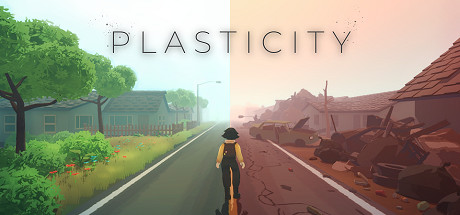
Plasticity is a hauntingly beautiful puzzle-platformer where you explore a plastic-ridden world. Traverse flooded cities and ravaged lands as you make choices that profoundly change both gameplay and your future.
Revenue comes from in-game items and microtransactions, which our price-based model doesn't estimate. Copies below reflect the player base, not paid sales.
Media

About
Genres
Stats
Languages: English**languages with full audio support
Engagement
Reviews
Themes across 40 recent reviews and how positive each mention is. A keyword signal, not full sentiment analysis.
Reviews
I like what the game represents along with the results/ending been affected by what you choose to do during the game, good story that shows sad fact in our life. My review (as fan of this game) is included in the video :). https://youtu.be/00RH3VdDV7o
There are a few negative reviews that I believe missed the entire point of this project. First off, it's completely free, so if you find it lacking, you lose nothing. Secondly, I feel the point of the game was to bring awareness to the harm people do to Earth everyday and encourage people to at least try to make a difference. I think it was meant to stir something in you more than anything. For me personally, they succeeded in that. I found the story heartwarming and I enjoyed seeing the impact that making different choices had in the end.
Related
Related
Trends
Concurrent players on Steam, sampled daily since tracking started.
Hours played at review time, across 40 reviews with recorded playtime.
positive critical· bar length = how often the theme comes up
Игра 'Plasticity' – это короткое, но очень атмосферное и эмоциональное приключение, посвящённое проблемам загрязнения окружающей среды. Механика проста и интуитивно понятна, позволяя сосредоточиться на исследовании постапокалиптичного мира и взаимодействии с его немногочисленными обитателями. Визуальный стиль игры, с его угловатыми формами и приглушенной цветовой палитрой, отлично передаёт ощущение безысходности и упадка. Сюжет не блещет сложными поворотами, но заставляет задуматься о последствиях бездумного отношения к природе. Взаимодействие с миром, особенно уборка мусора и восстановление элементов ландшафта, приносит чувство удовлетворения и надежды, пусть и хрупкой. Главный минус – небольшая продолжительность. Хотелось бы больше времени провести в этом мире и узнать больше о его истории и персонажах. Тем не менее, игра оставляет сильное впечатление и заставляет переосмыслить свое отношение к потреблению и защите окружающей среды. Рекомендую всем, кто ценит короткие, но содержательные игры с важным посылом.
very short but beautiful game with a message, how by destroying our own planet we are heading towards losing everything that is important to us, loved ones, life, health and the very planet we live on pros: - free - short but ok - more games like this should be made that speak how bad things are cons: - hopeless animation of the main character and a weak character model. especially at a young age. fix this, because I had the impression that I was running around like a drunk scarecrow. I know it can be done better. unnatural poses of the character during various activities - also needs to be fixed. thanks
In Plasticity, you navigate a world overrun by plastic waste. This side-scrolling game presents a dystopian vision of a future shaped choices, urging players to consider the impact of pollution through interactive storytelling. With simple yet effective puzzles and environmental choices that lead to either a hopeful or bleak outcome, the game delivers its message in a way that is thought-provoking. Visually, Plasticity stands out with its simple yet lovely art, painting a haunting yet beautiful world and a character you care about. Controls are easy utilizing movement and action clicks making Plasticity an easy game to pick up. While the game’s message is a bit heavy-handed, it’s undeniably relevant, and its short runtime (around 20 minutes) makes it an easy recommendation—especially since it’s free on Steam. While there are no achievements the gameplay is straightforward, and as a narrative-driven experience Plasticity succeeds in making you reflect on the consequences of pollution in our world. All in all, a solid experience. If you're looking for a quick but meaningful experience, then this game is worth playing. After all, a little time spent in the dystopian polluted world of Plasticity might just change how you see the real world.
A touching story with a timely message about the importance of taking care for the environment. I saw quite a few reviews citing bugs and various imperfections... Let me remind you that this game was created by students and is free to play. What is more important here is the message itself, and it is quite clear: [quote]It's never too late to make a difference.[/quote] For those taking the issue of environmental pollution seriously and interested in bringing a positive change, there are plenty of resources available, like [url=https://www.iberdrola.com/sustainability/how-to-reduce-plastic-use]this one[/url]. P. S. Looking forward to seeing someone making a game about the [url=https://en.wikipedia.org/wiki/Great_Pacific_garbage_patch]Great Pacific Garbage Patch[/url] (which is already about twice the size of Texas or three times the size of France) – maybe that would be a bigger eye-opener for people...
its good for the message and how it shows what the future might look like and that why im giving it a positive rating but on the game side could be better like with interacting with objects. just needs polish really
A short & Meaningful game with a important message to how our world will be looking like if a change doesn't happen soon to the global leading countries. The game itself has a bad optimization, therefore was it difficult from time to time.
Plasticity, developed and published by Plasticity Games, is a brief but evocative environmental puzzle-platformer that prioritizes mood, symbolism, and message over mechanical complexity. It’s the kind of experience that feels more like an interactive vignette than a traditional game, using its limited runtime to deliver a focused reflection on humanity’s relationship with plastic waste and the long-term consequences of consumption. While it doesn’t aim to challenge players in the conventional sense, it succeeds in creating a quiet, contemplative journey that lingers beyond its short duration. The game places players in a desolate, dreamlike world where plastic has overtaken nearly every aspect of the environment. Cities appear partially submerged, landscapes are choked with debris, and there is a persistent sense that nature has been pushed to the brink. Rather than explaining this scenario through dialogue or explicit storytelling, the game allows its world to speak for itself. Each area functions as a visual narrative, gradually revealing the extent of environmental damage through composition, scale, and contrast. This approach gives the experience a subtle emotional weight, encouraging players to interpret meaning through observation rather than instruction. Gameplay revolves around light exploration and simple puzzle-solving. Players move through linear spaces, interacting with objects to clear paths or trigger progression. The mechanics are intentionally straightforward, rarely demanding more than basic observation and timing. This simplicity ensures that the experience remains accessible and uninterrupted, allowing the focus to remain on atmosphere and theme. However, it also means that the gameplay itself lacks depth, serving primarily as a conduit for the game’s message rather than a source of sustained engagement. One of the more meaningful aspects of Plasticity is its understated use of player choice. While the game does not present branching paths in a traditional sense, certain interactions subtly influence the outcome, leading to different endings that reflect how the player engages with the world. These variations are not dramatically different, but they reinforce the central idea that individual actions—no matter how small—carry consequences. It’s a quiet but effective way of tying player behavior to the game’s environmental themes. Visually, the game is its strongest element. The environments are carefully crafted, blending muted tones with stark imagery of plastic accumulation to create a sense of both beauty and decay. There is a deliberate contrast between what once might have been vibrant spaces and what they have become, giving the world a melancholic quality. The sound design complements this atmosphere with minimalistic audio cues and ambient tones, enhancing the sense of isolation without overwhelming the experience. Together, these elements create a cohesive aesthetic that carries much of the game’s emotional impact. The game’s brevity, however, is both a defining feature and a limitation. With a runtime that can be completed in under an hour, it offers only a snapshot of its ideas rather than a fully developed exploration. While this concise format helps maintain focus, it also limits the depth of both its narrative and its mechanics. Technical roughness, including minor visual inconsistencies and a lack of certain quality-of-life features, further reinforces the sense that the game is a small-scale project rather than a fully polished release. Despite these shortcomings, Plasticity achieves something meaningful within its limited scope. It uses interactivity to reinforce its message, allowing players to engage with its themes in a way that feels personal rather than didactic. The experience may not offer lasting gameplay depth or replayability, but it succeeds in creating a memorable atmosphere and delivering a clear, thought-provoking statement. In the end, Plasticity stands as an example of how games can function as expressive, message-driven works. It is not designed to entertain in the traditional sense, but to provoke reflection and awareness. For players open to a slower, more contemplative experience, it offers a short but impactful journey that resonates beyond the screen. Rating: 7/10
A little game about plastics and general pollution, it has a nice message i mean, it's not a masterpiece but still, a nice little game about a serious problem that we still have.
Momentum
Pace estimated from the game's recent review growth (our daily snapshots) at its own sales-per-review ratio — a momentum signal, not booked sales.
Audience
Estimated from the language of this game's reviews — a proxy for where players are, not official Steam demographics.