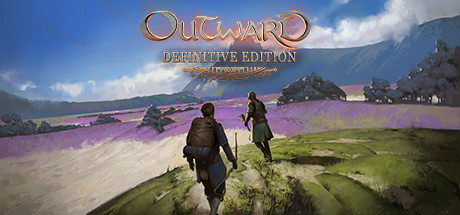
This game is a breath of fresh air,
It doesn't hold your hand. You aren't following icons or some sort of quest marker, you instead are following the details and descriptions given of places, items, and whatever else notable requirements that pertain to the quest you are given. You can refer to your journal, akin to TES III: Morrowind should you get side tracked or forget.
This isn’t like some other games where you are interacting with an NPC who vaguely tells you to do something, then miraculously knows all the details and can pinpoint an exact longitude and latitude of a location or item on a map/compass. You must follow the details and prepare for setting out into the world.
Combat is heavy, actions you make must be done with intention. Combat in this game isn’t a button mashing gong show or a mini game of memorising a script of button sequences. You have to pay attention to enemy queues, your vitals, your equipment and arsenal of resources in your bag you have prepared. The game uses an impact system where you can breach an enemy’s defence and make them vulnerable to attacks which adds another layer to the depth of combat.
Magic in this game is phenomenal. You combine spells to activate special alternating abilities. I won’t go too deep into each class/trainer as they all are quite unique and a system in and of themselves. The basics of the magic system could be split into two distinct forms, sigils and runes. Sigils let you place an area on the ground, where standing in that area will change what your spells will do, where careful planning can give you an advantage as sigils aren’t really meant for casting on the fly when in combat. Runes are spells you cast in an appropriate combination to set off a certain spell, later on they can be expanded on to extend their rune combinations and effects without relying on a sigil on the ground to empower your abilities.
As for weapons and stamina abilities, they are just as extensive as the magic system and overlap in many ways as their systems aren’t exclusive to each other. There are so many different types of weapons and associated skills for them that I find myself experimenting with different ones all the time, just out of curiosity. There are trainers for weapon abilities just as there are for magic spells, all throughout the world.
Speaking about the world, it is an open world game that is broken down into different regions/zoning. Each external zone is about 2km by 2km (4km square) and there are 6 external zones for a total of 24km square (not including the interior instances). There are many notable locations throughout each zone; several dungeons, a main city, things relating to lore or certain classes (like cabal hermit and the wind towers scattered throughout the world).
There is a bit of micromanaging which I understand isn’t entirely ‘fun’ to deal with. The first being survival mechanics such as disease, hunger, thirst, temperature, and fatigue/sleeping, etc... As annoying as it can be at time to manage these different mechanics, they get easier to deal with as you progress in the game as they become an added layer of depth to not just survival but combat. The survival mechanics in this game makes preparation and being cautious or mindful a very rewarding experience and adds to build diversity. Different encounters throughout different maps along with the change of seasons force players to adapt and find new ways to use items and spells. There is so much to cover about this part of the game, but I will leave it at that.
I want to touch on inventory & encumbrance, as this is another common topic that players typically find annoying to deal with… And I do agree with them. I think part of the problem though as someone who plays a lot of MMOs and likes to hoard stuff, it is hard to tell myself to say ‘no’ and stop looting everything. A lot of people probably have developed bad habits from other games and don’t like that they can just carry them on, on this one. This carrying capacity limit is something that forces players to be mindful of what they are brining along with them. It is like a soft cap to prevent players not just from hoarding but also overstocking and becoming a walking drug store.
As much as this game has a tight carrying capacity, at least at first, there are many ways around this. Player housing storage, player backpack, and pocket size increase on clothing. Larger bags do tend to have drawbacks like dodge and movement penalties (but not all do), and an easy way to get around this is to just drop the bag when you engage in fights, then reequip when done.
Death is a major part of this game that is unique in itself… So basically, when you ‘die’ you will wake up in a scenario; saved by a stranger, maybe pulled into a dungeon, captured by bandits, drift to shore from the sea, as so on. What dying in this game does is give players a new narrative to their character’s storey and sometimes bring some lore from the world into play to intervene with the player from dying for good. There are consequences for dying, but it also brings new opportunities to the player as a means to try and do better.
There are NPCs, side quests, a main storey, and factions in this game. I will not touch much on those to avoid spoilers. I will say though, there are quests with time limits, some have a 5 in-game day limit to complete. Failing to complete quests doesn’t necessarily mean you are locked out, however, as there are sometimes other methods and alternative endings to finishing them.
The game also has co-op and is extremely fun to plan out your adventure with a buddy and plot how you’ll ambush enemy encounters or synergize each other’s builds.
So yeah! 😊
Did not disappoint.