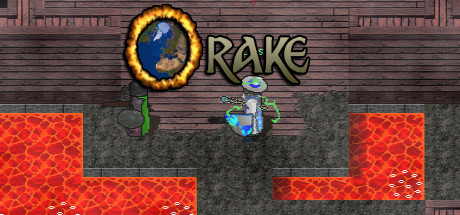
Orake Classic is an old school, 2D tile-based ORPG featuring a variety of skills, monsters, bosses, quests, and extensive lands to explore.
Modeled estimate, not a reported figure. How we estimate →
Media
About
Genres
Stats
Languages: English**languages with full audio support
Engagement
Reviews
Themes across 40 recent reviews and how positive each mention is. A keyword signal, not full sentiment analysis.
Reviews
Я исследовал множество городов, подземелий и специальных зон, где меня ждали уникальные предметы и сложные противники. Особенно мне нравится, что можно развивать различные способности, выбирая между боевыми, небоевыми и крафтовыми навыками. Это позволяет адаптировать свой стиль игры под разные ситуации и получать удовольствие от разнообразия возможностей. Также я рад, что могу присоединиться к гильдии или пригласить друзей и создать свою собственную. Это добавляет игре социальный аспект и делает её ещё более увлекательной. Установка игры стала проще, чем раньше, и сообщество игроков готово помочь новичкам освоиться и понять, за что они полюбили эту игру. Я уверен, что проведу в ней ещё много часов, наслаждаясь увлекательным геймплеем и приятной атмосферой.
Was a very fun game to play when it had a playerbase. For some reason I liked the clunky movement and the the grind aspect (could even say that it's even more grindy than runescape), maybe it was addicting because I was competing with the little playerbase that was also starting at the same point and had no clue wtf was going on. Anyways, again, sad that the accounts were wiped and the playerbase is 0.
Related
Related
Trends
Concurrent players on Steam, sampled daily since tracking started.
Hours played at review time, across 40 reviews with recorded playtime.
positive critical· bar length = how often the theme comes up
Orake Classic, çeşitli beceriler, canavarlar, patronlar, görevler ve keşfedilecek geniş topraklar içeren eski tarz, 2D karo tabanlı bir ORPG'dir.
Orake Classic by PigLion Games is a throwback-style 2D MMORPG that deliberately embraces the design philosophy of early online role-playing games, prioritizing open-ended progression, player-driven systems, and long-term investment over accessibility or modern convenience. It presents itself less as a polished contemporary MMO and more as a preservation of an older approach to the genre, where progress is earned slowly, risk carries real consequences, and much of the experience is shaped by how players choose to interact with the world and each other. At the center of the game is its classless progression system, which allows players to develop their characters organically based on the actions they perform. Instead of committing to a predefined role, your abilities evolve through use—whether that means combat, resource gathering, or other activities. This system provides a strong sense of freedom, as it allows players to experiment with different playstyles and gradually define their own identity. However, that freedom comes with a cost. Progress is often slow and repetitive, requiring sustained effort over long periods. For players who enjoy incremental growth and the satisfaction of building something over time, this can be deeply rewarding, but for others, it may feel like a grind without enough variation to maintain interest. The core gameplay loop is familiar in structure but stripped down in execution. Players explore a tiled world, take on quests, fight enemies, and gather resources to improve their character’s capabilities. There is a steady sense of advancement, but it is tied more to persistence than to narrative or structured progression. The game does not guide the player in the same way as modern MMOs, instead leaving much of the experience open-ended. This can create a sense of discovery, but it can also lead to moments of aimlessness, particularly for players who are used to more directed gameplay. One of the defining aspects of Orake Classic is its emphasis on player interaction and risk. Certain areas allow for player-versus-player combat with significant consequences, including the potential loss of items upon defeat. This introduces a level of tension that is largely absent from more forgiving modern games, making every encounter feel meaningful. The presence of real risk can heighten the excitement of exploration and combat, but it also means that progress can be undone quickly, which may not appeal to everyone. This design reflects an older philosophy where stakes were higher and failure carried weight, but it also requires a level of patience and resilience from the player. Visually, the game adopts a simple 2D style that is unmistakably retro. The tile-based environments and basic character sprites are functional and easy to read, but they lack the detail and variety expected from more modern titles. Animation is minimal, and the world can feel static as a result. While this aesthetic aligns with the game’s nostalgic intentions, it also reinforces its limitations, particularly for players who value visual immersion or presentation. The interface follows a similar pattern—straightforward but somewhat clunky, with controls that can feel less responsive than ideal. Content is present in the form of different areas, enemies, and skills to develop, but much of it follows a repetitive structure. Without strong narrative elements or evolving mechanics to break up the loop, the experience can become monotonous over time. The game relies heavily on the player’s willingness to engage with its systems and create their own goals, rather than providing a constant stream of new or varied content. This makes it more of a sandbox experience than a guided journey, which can be either a strength or a weakness depending on the player’s preferences. An important aspect of Orake Classic is its history and the role of its community. The game feels like a collaborative effort sustained by players who appreciate its design and want to keep it alive. This gives it a certain authenticity and charm, as it exists not just as a product but as a shared project. At the same time, this also means that development and support have been inconsistent, and the overall experience can feel rough around the edges. It lacks the polish and stability of more commercially driven titles, which can impact long-term engagement. Ultimately, Orake Classic is a niche experience that remains true to its roots. It does not attempt to modernize its systems or broaden its appeal, instead focusing on delivering a specific kind of MMORPG experience that values freedom, persistence, and player interaction. For those who are drawn to old-school design and are willing to accept its slower pace and rough presentation, it offers a sense of authenticity that is increasingly rare. For others, its dated mechanics, repetitive structure, and lack of polish may make it difficult to stay engaged. It is a game that stands as both a playable experience and a reflection of an earlier era in online gaming, offering a glimpse into how MMORPGs once approached progression and community. Whether that is appealing depends largely on what you are looking for, but there is no doubt that it remains committed to its identity. Rating: 6/10
Lots of potential. Coming back to the game and thoroughly enjoying the new content. :)
[h1] [/h1]
-
I would like to come back to this game but it seems its not operating right now. not fully anyway. Stuck at the first area cant pickup the key.
Nice! great game ! Play and compete with family members . Chat and make friends along the way! Members have access to a portal area/lounge and 2nd bank for all the extra loot accumulated from different maps . :)
muito top
Momentum
Pace estimated from the game's recent review growth (our daily snapshots) at its own sales-per-review ratio — a momentum signal, not booked sales.
Audience
Estimated from the language of this game's reviews — a proxy for where players are, not official Steam demographics.