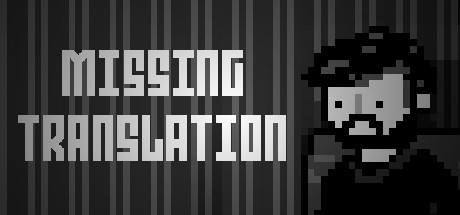
Missing Translation is a distinctive puzzle adventure developed by AlPixel Games, Luis Diaz, Gustavo Santos, Albert Fernandez, and Tice Thomason, and published by GamesBoosters. What immediately separates it from most games in the genre is its complete rejection of traditional communication methods. There are no readable dialogues, no lengthy tutorials, and no quest logs guiding the player from one objective to another. Instead, the game places players in an unfamiliar world and asks them to learn its rules through observation, experimentation, and logic. This design philosophy transforms the entire experience into a puzzle where understanding the world itself is just as important as solving the challenges within it.
The story begins with a lone traveler arriving in a strange settlement populated by mysterious creatures and surrounded by symbols that appear impossible to understand. Rather than explaining the setting through text or narration, the game allows players to gradually uncover meaning through interaction. Every environment, object, and visual clue contributes to a larger picture that must be assembled piece by piece. This approach creates a powerful sense of curiosity because progress feels earned rather than given. The game constantly encourages players to ask questions and search for answers on their own terms.
At the center of the experience is a collection of interconnected puzzles that rely heavily on pattern recognition and environmental awareness. The challenges are cleverly designed to teach players through experimentation rather than direct instruction. Early puzzles introduce concepts in a subtle manner, while later sections build upon previously learned ideas to create more demanding scenarios. This progression creates a satisfying sense of growth as players become increasingly fluent in the game's unique logic. Solving a difficult puzzle often feels rewarding because the solution comes from genuine understanding rather than following obvious hints.
One of the game's most fascinating features is its fictional symbolic language. Throughout the adventure, players encounter signs, markings, and visual messages that initially appear meaningless. Over time, repeated exposure and contextual clues allow players to identify patterns and interpret portions of this strange communication system. The process of slowly deciphering the language becomes a puzzle in itself, adding another layer of engagement beyond the standard environmental challenges. Few games make understanding their world such a central part of the experience, and Missing Translation executes this concept remarkably well.
The visual presentation contributes significantly to the atmosphere. The monochromatic pixel-art style creates a distinctive identity that is both minimalist and expressive. The lack of color directs attention toward shapes, symbols, and environmental details, which is particularly important in a game built around observation. Despite the simplicity of the artwork, the environments feel memorable and filled with personality. Every location contributes to the sense of exploring a forgotten place governed by rules that are slowly being uncovered.
The game's atmosphere is further strengthened by its soundtrack. The music is subtle yet effective, creating a mood that alternates between peaceful exploration and thoughtful contemplation. Because there is very little direct storytelling, the audio carries much of the emotional weight. It reinforces the feeling of wandering through an unfamiliar world where every discovery has significance. The soundtrack rarely demands attention, but it consistently enhances the experience and helps maintain immersion.
Exploration plays a larger role than players might initially expect. Progress often depends on carefully examining surroundings and paying attention to details that could easily be overlooked. The game rewards curiosity and patience, encouraging players to investigate every corner of its strange world. This emphasis on discovery helps maintain engagement because there is always the possibility that a seemingly insignificant object or symbol could reveal an important clue later.
Another strength lies in the game's accessibility across language barriers. By removing conventional text almost entirely, the developers created an experience that can be enjoyed regardless of the player's native language. This universal design is not only innovative but also reinforces the game's central themes of communication and understanding. The lack of written language becomes a feature rather than a limitation, encouraging players to rely on observation and reasoning instead of words.
The game's unconventional design may not appeal to everyone. Players who prefer clear objectives, explicit instructions, and constant guidance may occasionally feel uncertain about what to do next. Missing Translation expects active participation and careful attention, and it rarely offers direct assistance. However, this willingness to challenge players is also what makes the experience so memorable. The satisfaction of uncovering a solution through personal deduction is far greater than simply following a marker on a map.
For a free title, Missing Translation demonstrates an impressive level of creativity and confidence. It takes a bold concept and commits to it fully, resulting in an experience that feels genuinely unique. Rather than relying on spectacle or complex mechanics, it focuses on curiosity, discovery, and the joy of learning an unfamiliar system. The combination of inventive puzzle design, atmospheric presentation, and innovative communication mechanics creates an adventure that remains memorable long after completion.
Missing Translation may not be the longest puzzle game available, but it leaves a lasting impression through the originality of its ideas and the intelligence of its design. It is a thoughtful and rewarding experience that trusts players to figure things out for themselves, and that trust results in some of the most satisfying moments the genre can offer.
Rating: 8/10