Do You Like Adventure and Strategy Games?
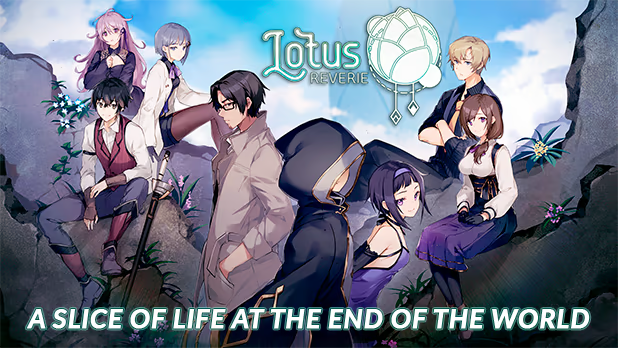
Lotus Reverie is a visual novel focused on time management, following in the footsteps of other games such as Devil Survivor and Persona. Within a limited amount of time, you will forge bonds with other survivors and uncover the incredible mysteries this world hides in this survival game where only one pair will remain.
You will enjoy the best of each character and survive to the end of the world!
A cheerful slice of life... until the world ends.

One day
the Incident suddenly occurred, causing almost all the citizens to vanish by unknown means. Among the chaos,
two great changes came crashing down on their lives:
First,
tulpas came to existence. These beings look and act just like any person, however, they are born through the subconscious mind of another human called the host, and their lives are linked in several different ways:
- Even though tulpas look human, they cannot die by normal means, but, in exchange, their lifespans are very limited.
- If the human host dies, the tulpa will also die, and vice versa. For this very reason, they are forced to cooperate with each other if they want to stay alive.
- The only way to extend their lifespans is by fighting and killing another tulpa and their host in a duel. This is the only moment where a tulpa loses its immortality and becomes vulnerable.
Second, in the city's center, a huge monolith appeared that towers up as far as the eye can see. Inscribed in the monolith are six rules, making clear just one thing:
Only one human and their tulpa will survive.
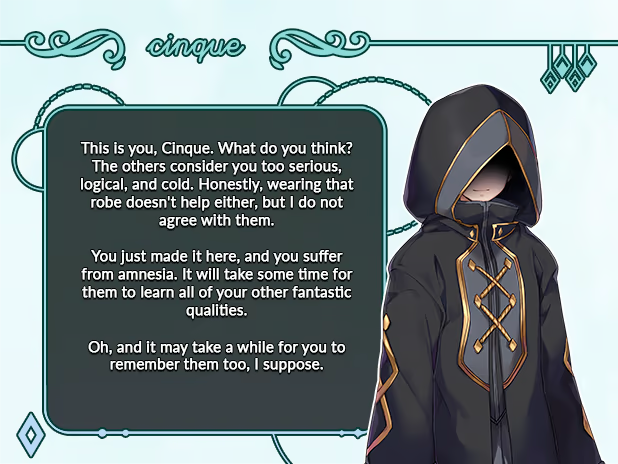
 This story's protagonist is Cinque
, a girl with no memories who appeared one night in front of the castle. Barricaded inside is an alliance of survivors who help each other from any external dangers.
As the newest member in the castle,
Cinque will start her own particular daily life, trying
to find out more about the Incident, her castle companions, as well as about her own life and memories, many of which manifest as strong hallucinations that blur the line between fantasy and reality.
Cinque will be able to decide what to do at all times while
enjoying the happy and calm life in the castle, but she must be careful: no matter how peaceful everything may seem, it all can be destroyed at any moment.
Prepare for what is to come while trying to remember who you are.
 Cinque will decide which scenes to play
. She can play main scenes to advance the story, play secondary scenes to get to know the other characters better, explore to find out more about the world, or train or study to increase the number of skills or spells she can use in battle.
Your actions and decisions will allow you to
recover your memories as you progress, unlocking new battle styles and spells, as well as uncovering the lore and mysteries surrounding the Incident. But be careful,
as time passes, the tension at the castle will rise, and it is game over if it gets too high. Try to recover as many memories and get to know as many of the other characters as possible within a limited amount of time.
There will be times where you are forced to fight, though, and you will have three different ways to experience it.
- Novel mode: for those who only want to enjoy the story. Read the battle and do not worry about training or studying to improve your abilities.
- Battle mode: for those who prefer to defend themselves. Enjoy the new Parallel Strategy System minigame and make sure you train and study diligently to stay sharp.
- Mixed mode: for those who want to experience everything. You will play the battles, and after winning, also read them.
The new
Parallel Strategy System is a turn-based strategy battle minigame where
turns happen at the same time. Both you and the enemy AI will choose your turns beforehand and then, once you are ready, your units will move by themselves following your previous plan. Plan ahead and try to guess your enemy's behavior, the story contains all the hints you need to succeed in battle and survive another day.