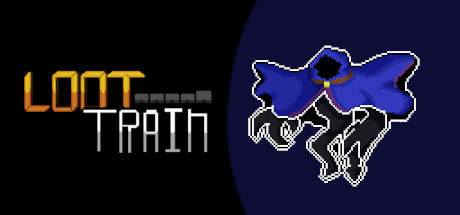
Loot Train is a roguelite action game developed and published by TechieMay that places players in the role of a mysterious hooded thief determined to rob a bizarre and seemingly endless train packed with valuables, strange passengers, and dangerous defenders. The premise itself carries a slightly dark comedic tone: a massive train filled with wealth travels through a surreal world, and the protagonist’s singular goal is to pillage it car by car while overcoming the enemies and protectors who stand in the way. The game blends elements of roguelite progression, action combat, and light platforming into a compact indie experience that revolves around repeated runs and experimentation.
The structure of Loot Train follows the typical roguelite format where each playthrough begins with a fresh attempt to travel deeper through the train’s compartments. Every carriage acts as a small combat arena filled with enemies, hazards, or rewards. Because the train is procedurally generated, the arrangement of rooms, encounters, and items changes from one run to the next. This system ensures that the game rarely unfolds exactly the same way twice, encouraging players to adapt their tactics and experiment with new strategies as they advance.
The player character is a hooded thief whose origin remains intentionally mysterious. Armed with a variety of weapons and abilities, this character moves through the train’s compartments defeating enemies and collecting loot that can enhance their power. The journey is not simply about surviving individual encounters but about learning how to navigate the unpredictable structure of each run. Knowledge of enemy behavior, item interactions, and environmental layouts gradually becomes one of the most valuable resources a player can acquire.
Combat is fast and chaotic, with a wide range of enemies appearing throughout the train. These adversaries range from simple attackers that rush the player directly to more unusual enemies that require careful positioning or timing to defeat. As the run progresses, enemy encounters become increasingly difficult, forcing players to manage their health, abilities, and positioning carefully in order to survive. The pacing often shifts between quick bursts of action and brief moments of preparation as players evaluate newly discovered items.
Boss encounters serve as major milestones within each run. These powerful enemies are summoned by a fictional organization known as the Guild of Righteous Protectors, whose purpose is to defend the train and its passengers from the protagonist’s relentless robbery spree. Boss fights are significantly more challenging than standard enemy encounters and require a stronger understanding of the game’s mechanics. Successfully defeating a boss often feels like a turning point within a run, allowing players to push further into the train’s increasingly dangerous sections.
Loot is the heart of the entire experience. As players progress through the train, they discover an enormous variety of items that modify their abilities in different ways. The game features hundreds of unique items, each with its own effect, encouraging players to experiment with different combinations during each run. Some items increase attack power or defensive capabilities, while others introduce unusual mechanics that can drastically change how the character behaves in combat.
The inventory system adds an additional layer of strategy. Because players cannot carry everything they encounter, they must constantly decide which items to keep and which to discard. This decision-making process becomes more complex as the run progresses and stronger equipment begins to appear. Players must weigh the advantages of new items against the potential loss of powerful gear they already possess.
The game also includes a character progression system that extends beyond individual runs. Players can unlock and experiment with multiple character classes, each with its own strengths and playstyle. Some classes emphasize offensive power, while others focus on survivability or utility. This variety helps diversify the experience and encourages players to try different approaches when tackling the train’s challenges.
Visually, Loot Train adopts a colorful pixel-art style that gives the game a distinctive personality. Characters, enemies, and environments are rendered in bright, expressive sprites that bring the strange world of the train to life. Each carriage can introduce new visual themes or enemy designs, reinforcing the sense that the player is traveling through a long and unpredictable environment.
The art direction also contributes to the game’s surreal tone. Many enemies and characters appear intentionally bizarre, combining humorous and fantastical elements. This whimsical presentation contrasts with the otherwise dark premise of a thief committing relentless acts of robbery and violence across an endless train, giving the game a unique blend of comedy and chaos.
Sound design complements the fast-paced gameplay with energetic effects and rhythmic background music. Combat sounds are sharp and satisfying, emphasizing the impact of attacks and enemy defeats. The soundtrack maintains a steady momentum that keeps the action moving forward as players push deeper into the train’s interior.
One of the strongest aspects of Loot Train is its replayability. The procedural generation system, combined with the large variety of items and character classes, ensures that each run feels different. Players gradually improve through both skill and knowledge, learning how certain item combinations interact and how different enemies behave. This gradual mastery is a hallmark of the roguelite genre and forms the backbone of the game’s long-term appeal.
However, the design also introduces some limitations. Because each run resets most of the player’s progress, newcomers may find themselves repeating early sections many times before reaching deeper parts of the train. This repetition is common in roguelite games, but it may feel frustrating to players who prefer more permanent progression systems.
The game’s relatively small development scope is also noticeable in certain areas. While the variety of items and enemies helps maintain interest, the overall structure remains focused on moving from one train car to another and fighting enemies. Players looking for extensive narrative development or expansive world-building may find the experience somewhat limited.
Despite these shortcomings, Loot Train succeeds as an entertaining indie roguelite with a memorable concept. Its unusual setting, diverse item system, and procedurally generated gameplay combine to create a chaotic but enjoyable adventure where every run becomes a new attempt at pulling off the ultimate heist.
Ultimately, the game stands out as a creative and lightweight roguelite experience that rewards experimentation and persistence. For players who enjoy action-heavy runs, unpredictable item combinations, and the thrill of discovering new strategies with every attempt, Loot Train offers a satisfying journey through one of the strangest trains in indie gaming.
Rating: 6/10