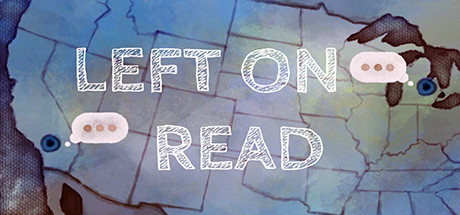
Left on Read is an indie narrative experience developed by Weston Bell-Geddes and published by Spookulele Games that takes a familiar modern social fear and transforms it into an interactive story about communication, distance, and emotional uncertainty. Rather than focusing on large adventures or traditional gameplay systems, the game builds its identity around something remarkably ordinary: texting someone you care about and worrying whether the connection is slipping away. That simple foundation becomes the driving force behind an experience that feels relatable, thoughtful, and surprisingly emotional.
Set during the early months of quarantine in 2020, the story follows a college student forced to leave campus and return home as daily life suddenly changes. Alongside the disruption comes unfinished business in the form of a relationship that feels uncertain and unresolved. Conversations that once happened naturally in person are now limited to phone screens and delayed replies. Through text exchanges and player decisions, the game explores how difficult it can be to preserve closeness when distance and silence become part of everyday life.
The central gameplay mechanic revolves around conversations, but Left on Read avoids presenting dialogue through traditional visual novel structures. Instead, movement and platforming mechanics become part of communication itself. Players physically navigate through exchanges, creating an unusual interaction system that gives dialogue greater involvement than simply selecting responses from menus. It is a creative approach that immediately gives the experience individuality while reinforcing player engagement.
The writing serves as the game's strongest asset. Conversations capture the awkward rhythm of modern communication surprisingly well. Messages feel believable rather than overly scripted, balancing humor, uncertainty, and vulnerability in ways that resemble actual conversations between young adults. Players often find themselves carefully considering responses, worrying about tone, timing, and how certain words may be interpreted. The experience successfully recreates the small anxieties that surround digital communication.
One of the game's most impressive qualities is how effectively it turns waiting into emotional tension. In everyday life, delayed replies can create uncertainty and overthinking. Left on Read embraces those emotions directly. Anticipation becomes part of gameplay rather than empty downtime. The silence between conversations often carries emotional weight equal to the conversations themselves.
A particularly memorable addition comes through the optional Realistic Mode, which attempts to simulate actual messaging delays. Instead of instantly delivering responses, the game introduces waiting periods that mirror real-life communication habits. It is an unusual feature that demonstrates strong commitment to immersion. Some players may appreciate the authenticity while others may find it tests their patience, but the inclusion reflects a willingness to experiment with how narrative games handle realism.
Visually, Left on Read favors simplicity. The interface-driven presentation keeps attention centered on dialogue and emotional context rather than visual spectacle. Minimalist design choices support the isolated atmosphere effectively, reinforcing themes of loneliness and separation without unnecessary distractions. The aesthetic remains clean and focused, allowing emotional storytelling to remain at the forefront.
Sound design also contributes meaningfully to the experience. Notification sounds, ambient music, and quieter moments combine to create emotional pacing that feels natural. Small audio cues become surprisingly impactful because players begin associating them with anticipation and emotional payoff. The developers understand how modern communication habits influence emotion and use audio effectively to reinforce that connection.
The game's structure remains intentionally focused rather than mechanically complex. Players seeking extensive branching narratives or deep gameplay systems may find limitations in overall scope. However, Left on Read succeeds because it understands exactly what kind of story it wants to tell. Rather than stretching beyond its strengths, it delivers a concentrated experience centered on emotional authenticity.
The themes surrounding loneliness, uncertainty, connection, and vulnerability resonate particularly well because they feel grounded in ordinary life. There are no world-ending threats or grand fantasy adventures here. Instead, the emotional stakes come from something far more recognizable: trying to maintain an important relationship through screens, delays, and imperfect communication.
Left on Read ultimately succeeds because it transforms familiar social experiences into meaningful interactive storytelling. Weston Bell-Geddes and Spookulele Games deliver a game that feels intimate without becoming overly dramatic and relatable without losing emotional impact. It captures an unusual moment in recent history while exploring feelings that remain universally understandable.
For players who appreciate narrative-focused experiences, character-driven storytelling, and games willing to experiment with unconventional ideas, Left on Read offers a memorable journey built around ordinary conversations that gradually reveal extraordinary emotional weight.
Rating: 8/10