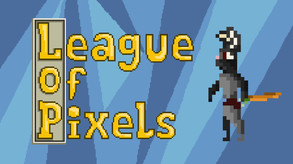
League of Pixels is a fast paced pixel art approach on the MOBA genre, with an average game length of 5-10 minutes.
Revenue comes from in-game items and microtransactions, which our price-based model doesn't estimate. Copies below reflect the player base, not paid sales.
Media

About


Genres
Stats
Languages: English
Engagement
Reviews
Themes across 40 recent reviews and how positive each mention is. A keyword signal, not full sentiment analysis.
Reviews
O jogo e bem legal, mas e uma pena que não tem ng para jogar!
League of Pixels - 2D MOBA is an independent competitive multiplayer title developed and published by Danius that takes inspiration from traditional multiplayer online battle arena games while reshaping the formula into a faster and more approachable side-scrolling experience. Rather than attempting to compete directly with massive genre giants through scale or complexity, the game focuses on creating a streamlined version of competitive arena combat that values speed, simplicity, and retro-inspired presentation. The result is a project that feels like a love letter to classic pixel visuals while experimenting with MOBA mechanics in a less demanding format. The most distinctive aspect of League of Pixels comes from how it translates familiar MOBA concepts into two-dimensional gameplay. Instead of controlling characters across sprawling three-lane battlefields viewed from an overhead perspective, players engage in combat across side-view maps where movement, positioning, and reactions become more immediate. The genre foundations remain recognizable. Teams clash over objectives, characters specialize in different combat roles, and strategic decision-making remains central to success. However, shifting the perspective dramatically changes how matches unfold. Combat moves at a noticeably faster pace than many larger MOBA experiences. Traditional matches in the genre often require lengthy time commitments that can stretch toward an hour or more. League of Pixels attempts to provide a condensed alternative that maintains competitive tension without demanding extended sessions. The quicker pace makes the game easier to approach for newcomers while also creating a more accessible option for players who enjoy competitive gameplay but cannot dedicate large blocks of time to individual matches. Character variety contributes to gameplay depth. Different heroes bring unique strengths and abilities to the battlefield, encouraging players to experiment with different approaches and team compositions. Some characters emphasize direct combat potential while others offer supportive capabilities or tactical advantages. Learning how each hero functions becomes an important part of mastering the game, particularly when considering how different abilities interact during team encounters. Progression during matches remains an important component of the experience. Defeating enemies, earning advantages, and strengthening characters over time creates the satisfying momentum expected from the genre. Players who understand map control, timing, and resource management gain meaningful advantages, ensuring that strategy remains relevant despite the game's faster structure. Mechanical skill matters, but awareness and planning remain equally valuable. Visually, League of Pixels embraces pixel-art presentation with confidence. The retro-inspired aesthetic gives the game personality while keeping visual information readable during fast-paced engagements. Character designs maintain clarity without sacrificing charm, and environments reinforce the game's classic arcade-inspired identity. Rather than pursuing graphical realism, the developers focus on readability and style, which serves competitive gameplay effectively. The simplified presentation also works in favor of accessibility. MOBA games can often appear intimidating to newer players due to information overload and layered systems. League of Pixels reduces some of that complexity without removing strategic depth entirely. Players can understand core mechanics relatively quickly while still finding room for improvement and mastery over time. The game's competitive structure naturally creates moments of intensity. Close matches often depend on timing, teamwork, and decision-making under pressure. Coordinated engagements and careful positioning can shift momentum rapidly, rewarding players who remain adaptable. While mechanical execution remains important, strategic awareness consistently influences results. As with many multiplayer-focused experiences, long-term enjoyment depends heavily on community activity and player population. Competitive games thrive when healthy matchmaking environments exist, and smaller independent multiplayer projects sometimes face challenges maintaining active communities over long periods. However, the design philosophy behind League of Pixels remains interesting regardless of population concerns because it demonstrates how established genres can evolve through creative reinterpretation. The title does not attempt to overwhelm players with endless complexity or feature overload. Instead, Danius focuses on refining a smaller concept and delivering a multiplayer experience built around accessibility and efficiency. That design approach gives League of Pixels its identity. It understands its goals clearly and commits to them. Players seeking an alternative to larger MOBA experiences may appreciate what League of Pixels offers. Its combination of retro presentation, streamlined competitive systems, and faster match pacing creates something familiar but distinct enough to stand apart from genre conventions. It may not possess the scale or production values of larger competitors, but originality and focus allow it to carve out its own space. League of Pixels - 2D MOBA succeeds most when viewed as an experiment in adaptation. It takes recognizable competitive systems and reshapes them into something more compact without abandoning strategic foundations entirely. For players interested in pixel-art multiplayer games and condensed competitive experiences, it offers an enjoyable variation on a genre that often feels dominated by larger names. Rating: 7/10
Related
Related
Trends
Concurrent players on Steam, sampled daily since tracking started.
Hours played at review time, across 40 reviews with recorded playtime.
positive critical· bar length = how often the theme comes up
No Ganks... Jungle Gap and Mid Diff... - Funny Game for some Epic battles with your friends.
This game is amazing, and should be played by far more people! Pros: - Infinite replayability - Very fun, even against an NPC - Many characters to choose from - All attacks used with the mouse - Should be at least $1, but free - Split screen multiplayer Cons: - Only one map - No Character Customization Overall Score... 9/10 :D
[h1]Before I played League of Pixels, I had a small pp, no friends, no gf, depression, and no life. These things havent changed, but the game is pretty good[/h1]
Daha fazla karakter ve eşya olsaydı süper olurdu.
plz update mac os ver
Fun MOBA-lite brawler, pretty fast paced and skill based Very easy to pickup and learn the basics of, choice of heroes might seem intimidating at first but they all play in fun unique ways Suprising number of people still play it and has a nice friendly community on Discord that help newcomers
fun game to play with freinds
Pretty fun game and if you can convince your friends to play it with you, you can have some really fun LAN-Parties. It's controls are easy to learn and there are simple but effective game mechanics which you figure out pretty quick. It's not a game which has GOAT potential or even is a game which you play for a long period of time, but it's nice to play it here and then.
Momentum
Pace estimated from the game's recent review growth (our daily snapshots) at its own sales-per-review ratio — a momentum signal, not booked sales.
Audience
Estimated from the language of this game's reviews — a proxy for where players are, not official Steam demographics.