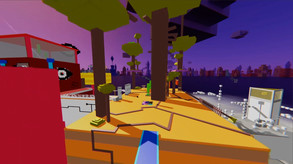
DEPO is a first person 3D platformer where you control a rebel pixel inside a computer with an evil Operating System governing everything. You'll find final bosses, cinematic scenes, arcade mini-games, 70 huge levels full of surprises, ¡and big stories to discover!
Revenue comes from in-game items and microtransactions, which our price-based model doesn't estimate. Copies below reflect the player base, not paid sales.
Media

About


Genres
Stats
Engagement
Reviews
Themes across 41 recent reviews and how positive each mention is. A keyword signal, not full sentiment analysis.
Reviews
Uno de los mejores juegos q encontre de casualidad buscando en nichos y gratis. estan muy buenos los puzzles aunque en la parte de speedrunnear todos los niveles para subir al maximo nivel es medio tedioso mas si el nivel es largo
Игра DEPO: Death Epileptic Pixel Origins – это сумасшедший коктейль из пиксельной графики, психоделического сюжета и брутального геймплея. С первых минут игра оглушает визуальным шумом и хаотичным повествованием, бросая игрока в шкуру социопата, живущего в грязном, утопичном антимире. Поначалу происходящее кажется бессмысленным бредом, но постепенно начинаешь улавливать связи между безумными персонажами, странными событиями и философскими отсылками. Геймплей представляет собой смесь point-and-click адвенчуры с элементами хоррора и головоломок, порой совершенно нелогичных и требующих абсурдного мышления. DEPO не для всех. Она отталкивает своей неприкрытой жестокостью, шокирующими образами и отсутствием чётких объяснений. Но если вы ищете что-то действительно необычное, провокационное и запоминающееся, то DEPO стоит попробовать. Это игра, которая оставит после себя след, пусть и немного неприятный. Осторожно, может вызвать эпилептические припадки!
Related
Related
Trends
Concurrent players on Steam, sampled daily since tracking started.
Languages: English, French, Spanish - Spain, Spanish - Latin America, Italian, German, Simplified Chinese, Portuguese - Portugal, Russian, Turkish, Traditional Chinese, Japanese +1 more
Hours played at review time, across 41 reviews with recorded playtime.
positive critical· bar length = how often the theme comes up
Клёвый сюжет.
harika bir platform oyunu bu!!!!!!!
мне очеееень нравится эта игра, играю уже неделю без остоновки (типо 7 день подряд) играю со своим другом, поссорились день назад но он извинился и мы начали очень плотно играть, эта игра стала для меня второй любимой
DEPO : Death Epileptic Pixel Origins is an experimental psychological horror game that abandons traditional horror design in favor of pure sensory chaos, surreal imagery, and overwhelming audiovisual discomfort. Rather than attempting to create fear through realistic graphics or cinematic storytelling, the game traps players inside a corrupted digital nightmare where reality constantly feels unstable and hostile. The experience is aggressive, disorienting, and intentionally uncomfortable from beginning to end, creating a style of horror that feels far closer to a fever dream or broken simulation than a conventional survival horror adventure. From the opening moments, the game establishes an atmosphere built entirely around confusion and instability. Environments flicker violently, textures distort unexpectedly, and rooms shift between recognizable locations and abstract digital landscapes without warning. The world rarely feels safe or consistent, which becomes one of the game’s most effective psychological tools. Players are constantly uncertain whether what they are seeing is real, imagined, or simply part of the game’s intentionally corrupted visual design. This uncertainty creates tension long before traditional horror elements even begin appearing. The visual presentation is easily the game’s most memorable feature. DEPO embraces retro-inspired low-poly graphics and heavily pixelated textures reminiscent of older horror titles, but it combines those visuals with glitch effects, flashing imagery, color distortion, and abrupt environmental transitions that make the world feel deeply unnatural. Instead of aiming for realism, the game weaponizes visual discomfort itself. Hallways stretch strangely, objects appear partially broken, and entire environments seem to malfunction while players move through them. The result is a world that feels unstable in a way few horror games attempt. What makes the atmosphere particularly effective is how relentlessly oppressive it becomes. Even quiet moments feel deeply uncomfortable because the game constantly suggests that something terrible is about to happen. The environments rarely provide any emotional relief, creating a persistent sense of dread that slowly builds throughout the experience. Rather than relying entirely on direct scares, DEPO creates fear by making the player feel psychologically trapped inside a collapsing reality. Sound design plays a massive role in maintaining this tension. Distorted static, mechanical noises, distant whispers, harsh audio spikes, and unsettling ambient effects constantly pressure the player psychologically. The audio often feels intentionally abrasive, creating a sense of sensory overload that matches the unstable visuals perfectly. Silence is also used effectively, making empty spaces feel even more threatening because players begin expecting sudden audiovisual disruption at any moment. Gameplay revolves mostly around exploration, environmental interaction, and slowly uncovering fragments of meaning hidden inside the disturbing world. The game does not focus heavily on combat or traditional action mechanics. Instead, players wander through surreal environments while attempting to interpret cryptic imagery, environmental clues, and fragmented narrative pieces. The lack of direct explanation becomes part of the experience itself because confusion and uncertainty are central to the game’s identity. The storytelling is intentionally abstract and open to interpretation. Rather than presenting a straightforward narrative, DEPO delivers fragmented symbolism, disturbing imagery, and vague thematic ideas connected to corruption, decay, psychological collapse, and death. Players are left to construct their own understanding of the experience, which may either greatly enhance immersion or create frustration depending on personal preference. The ambiguity contributes heavily to the dreamlike atmosphere because the game never fully clarifies what is happening or why. Enemy encounters and horror sequences are used sparingly but effectively. The game rarely depends on repetitive chase scenes or constant monster attacks. Instead, horror often emerges from the unpredictability of the environment itself. Certain moments feel more like disturbing interactive art installations than traditional gameplay encounters, creating a style of horror that feels highly experimental and emotionally unsettling rather than action-oriented. The pacing remains surprisingly effective despite the chaotic presentation. The game gradually escalates its visual intensity and psychological pressure while introducing increasingly surreal and disturbing environments. Since the experience is relatively short, the relentless sensory overload never completely loses its impact before the conclusion arrives. The compact runtime actually strengthens the experience because it prevents the atmosphere from becoming exhausting or repetitive. However, DEPO is definitely not designed for everyone. The flashing visuals, aggressive distortion effects, and overwhelming audiovisual presentation can become genuinely uncomfortable, particularly for players sensitive to intense sensory stimulation. The game fully commits to this chaotic artistic direction, but it naturally limits accessibility for certain audiences. The gameplay systems themselves are also relatively simple. Players expecting deep mechanics, advanced puzzle design, or meaningful combat systems may find the overall structure somewhat limited. Much of the experience focuses entirely on atmosphere and emotional impact rather than mechanical complexity. The abstract storytelling may also alienate players searching for a more coherent narrative. Since the game rarely provides direct explanations, some players may struggle to connect with the experience emotionally or understand its themes clearly. The surreal presentation prioritizes interpretation and mood over clarity. Technical roughness appears occasionally as well. Certain animations and interactions feel awkward or unfinished, though the intentionally corrupted aesthetic sometimes makes these flaws difficult to separate from deliberate design choices. In some ways, the rough edges almost contribute to the unstable atmosphere rather than completely damaging immersion. What ultimately makes DEPO : Death Epileptic Pixel Origins memorable is its complete dedication to psychological discomfort and sensory horror. The game feels less interested in traditional scares and more focused on creating an emotionally exhausting nightmare where players constantly feel trapped inside a broken and hostile digital world. Few indie horror games commit so aggressively to atmosphere and experimentation. DEPO : Death Epileptic Pixel Origins is a disturbing and highly unconventional horror experience that prioritizes surreal terror, audiovisual chaos, and emotional unease over standard gameplay structure. It will likely divide players because of its abstract presentation and overwhelming style, but for those willing to embrace its experimental nature, it delivers a uniquely haunting descent into psychological horror that remains difficult to forget. Rating: 8/10
Необычный 3D-платформер от первого лица, где вы управляете пикселем-повстанцем внутри компьютера с злой операционной системой. Игроков ждут кинематографические сцены, аркадные мини-игры и 70 уровней, полных сюрпризов. Плюсы Уникальный стиль. Оригинальный пиксельный дизайн. Разнообразие контента. Мини-игры и кинематографические сцены. Множество уровней. 70 уровней с разными заданиями. Инди-атмосфера. Уютная и непринуждённая. Бесплатность. Игра доступна бесплатно. Минусы Сложность. Некоторые уровни могут быть запутанными. Графика. Пиксельный стиль может понравиться не всем. Технические проблемы. Возможны баги. Одиночный режим. Нет мультиплеера. Ограниченный контент. Возможно, мало контента для долгого прохождения. Итог DEPO: Death Epileptic Pixel Origins — необычная инди-игра для любителей платформеров и приключений. Привлекает оригинальным дизайном и разнообразием уровней. Однако технические проблемы и пиксельный стиль могут как привлечь, так и оттолкнуть. Подойдёт тем, кто ищет нестандартный игровой опыт и не боится трудностей.
[b]Looks like a good game, so it is a good game, right? No.[/b] [i]When you make a lot of content but players don't play it because you chose content bloat instead of quality experience.[/i] This game is a typical representative of the content bloat variety and a nostalgia predator. The whole atmosphere has obviously potential but it only serves to lure you in instead of delivering something and the gameplay mechanics are pretty lame too. Arena shooters (like Quake III: Arena) used to have better platforming/movement than this dedicated platforming game has. The experience is just okay and the positive reviews are, sadly, exaggerated, it's not a good game simply because gameplay, the main point of the whole game, is just average at best and the whole game is close to being called just a slop. The game had potential but didn't deliver it. It's like it shows glimpses of what this game could have been but is not. Basically... why would you settle for less when you can settle for more? There are better FREE games available to play, you can safely skip this one. Don't make me laugh that this should have been a paid experience while there are far better and more successful free games available. This dev is just lazy and pretty tasteless in comparison, there's no deeper refinement here, only an imitation of something more professional than it really is. It could have been good but it is not.
игра вроде классная я даже в дс подписался только я не понял почему стоит кооп. я как не пытался кто знает обьясните пж-хочу с братанчик покатать
50/50 fun but annoying at some times it could use some updates.for example:a free dlc packs im just saying some collabs would be cool and maybe a whole new dlc that is continuing the story
Momentum
Pace estimated from the game's recent review growth (our daily snapshots) at its own sales-per-review ratio — a momentum signal, not booked sales.
Audience
Estimated from the language of this game's reviews — a proxy for where players are, not official Steam demographics.