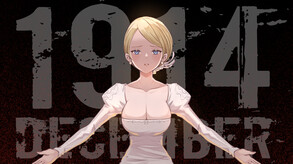
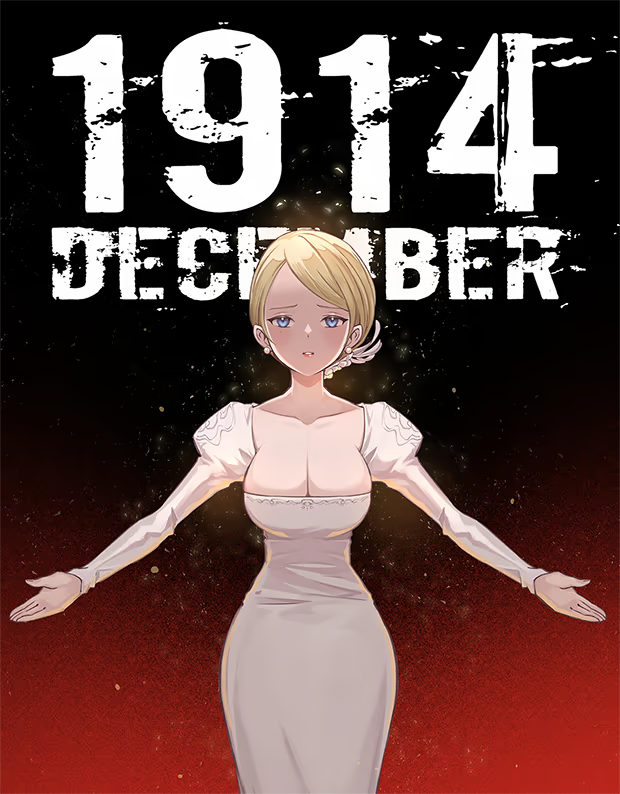
A comic-style narrative-oriented game based on the Christmas Eve Truce during World War I.
Revenue comes from in-game items and microtransactions, which our price-based model doesn't estimate. Copies below reflect the player base, not paid sales.
Media

About

Stats
Languages: English, French, German, Russian, Japanese, Ukrainian, Simplified Chinese, Traditional Chinese, Polish, Portuguese - Brazil, Spanish - Latin America
Engagement
Reviews
Themes across 40 recent reviews and how positive each mention is. A keyword signal, not full sentiment analysis.
Reviews
反战想法很好,但游戏机制设计不好,给反战题材套上了狙击小日本或者打地鼠,那里有敌人点哪里,另一个玩法就是几条路选一条,像极了那些“别上你也过不了”的微信小程序游戏,有这么好的背景音乐把游戏做成单纯的视觉小说多好,最大的问题是由于玩法无法代入
КЛАССНАЯ НОВЕЛЛА/СОВЕТУЮ ПРОЙТИ
このゲームは神ゲーだが戦争はクソゲー
Related
Related
Trends
Concurrent players on Steam, sampled daily since tracking started.
Hours played at review time, across 40 reviews with recorded playtime.
positive critical· bar length = how often the theme comes up
Chato, parece o jogo de bater na marmota com um martelo de sanfona.
[td][/td]
這款遊戲一般, 如果推薦有中庸的選項, 我會選擇它。 至少這款是免費遊戲, 何不下載來玩? 也不會損失什麼。 戰爭永遠沒有解答也不會結束。
⠀
免费 有中文 没成就
:'(
December 1914 is a narrative-focused World War I experience that approaches war from a deeply human and emotional perspective rather than treating it as a source of spectacle or nonstop combat. Inspired by the real historical Christmas Truce during the First World War, the game tells a smaller and more personal story centered around soldiers briefly setting aside violence in the middle of one of history’s deadliest conflicts. Instead of emphasizing heroism or military power, the experience focuses on fear, exhaustion, loneliness, and the fragile moments of compassion that emerged even during unimaginable suffering. From the opening moments, the game establishes a bleak and somber atmosphere. Players are placed inside muddy trenches surrounded by cold weather, ruined landscapes, and the constant threat of death. The environments immediately communicate the hopelessness of trench warfare, where survival often depended more on endurance than bravery. The game avoids romanticizing war and instead presents the battlefield as a place filled with misery, isolation, and emotional exhaustion. This grounded approach gives the experience a level of authenticity that makes its quieter moments far more impactful. One of the game’s greatest strengths is its atmosphere. The trenches feel claustrophobic and oppressive, while the distant sound of artillery and gunfire constantly reminds players that danger never fully disappears. Even when combat is absent, there is a lingering sense of tension hanging over every scene. The game uses silence and environmental detail carefully, allowing players to absorb the emotional weight of the setting rather than overwhelming them with constant action. This slower pacing helps create a reflective experience that feels more personal than most war-themed games. Visually, December 1914 embraces realism in order to support its emotional storytelling. The muddy trenches, devastated battlefields, and dim lighting all contribute to the harsh atmosphere of World War I. The environments are not especially flashy, but they successfully capture the feeling of existing inside a conflict defined by suffering and exhaustion. Small environmental details such as abandoned supplies, damaged structures, and empty no man’s land areas reinforce the sense of hopelessness that defines much of the experience. The narrative focuses on ordinary soldiers rather than legendary heroes, which helps make the story feel more believable and emotionally grounded. The game explores how individuals on opposing sides of the war were still capable of empathy and understanding despite being forced into violent conflict. The Christmas Truce itself becomes the emotional center of the experience, representing a rare moment where humanity briefly overcame hatred and fear. Rather than presenting war through patriotic ideals or dramatic military victories, the story emphasizes shared vulnerability and the emotional cost of violence. The sound design contributes heavily to the immersion. Distant explosions, footsteps through mud, quiet conversations, and restrained musical themes create an atmosphere that feels tense but emotionally reflective. The soundtrack avoids becoming overly cinematic or manipulative, instead supporting the emotional tone through subtle melodies and ambient sounds. Some of the game’s most memorable moments occur during silence, where players are simply observing the environment or standing beside soldiers from the opposing side without violence erupting between them. Gameplay remains intentionally simple throughout the experience. Exploration, interaction, and narrative progression take priority over traditional combat mechanics. Players spend much of their time moving through environments, observing details, and participating in scripted story sequences rather than engaging in large-scale battles. This slower structure reinforces the anti-war themes because the focus remains on emotional immersion rather than action. December 1914 feels closer to an interactive historical drama than a conventional military shooter, and that distinction helps it stand apart from many other war games. One of the most admirable qualities of the game is its respect for the historical event that inspired it. The Christmas Truce is treated not as a gimmick, but as a meaningful reminder of shared humanity during one of history’s most brutal wars. The game encourages reflection on the absurdity of conflict and the emotional toll carried by ordinary soldiers. This thematic focus gives the experience educational value as well as emotional depth. However, the game’s narrow scope and minimal gameplay may not appeal to everyone. Players expecting large-scale combat systems, deep mechanics, or lengthy campaigns may find the experience too limited. The gameplay itself is fairly linear, and much of the emotional impact depends on the player’s willingness to engage with the atmosphere and historical themes. Those looking for constant action or complex gameplay systems may find the pacing too slow. Technical limitations are also noticeable in certain areas. Character animations can occasionally feel stiff, and some interactions lack polish. The relatively short runtime may leave players wishing the game explored its characters and themes more deeply. While the focused structure works well emotionally, the experience occasionally feels more like an interactive historical presentation than a fully developed game with layered mechanics. Despite these flaws, December 1914 succeeds remarkably well at creating a thoughtful and emotionally resonant portrayal of World War I. Its greatest achievement lies in how effectively it humanizes soldiers on all sides of the conflict while emphasizing the emotional devastation caused by war. The game’s atmosphere, historical focus, and reflective storytelling create an experience that feels sincere and respectful rather than exploitative. For players interested in narrative-driven historical experiences and emotionally grounded storytelling, December 1914 offers a moving and memorable journey through one of the most extraordinary moments of peace during World War I. While its gameplay systems remain simple and its scope relatively small, the emotional impact of its themes and atmosphere make it a unique and worthwhile experience. Rating: 8/10
Momentum
Pace estimated from the game's recent review growth (our daily snapshots) at its own sales-per-review ratio — a momentum signal, not booked sales.
Audience
Estimated from the language of this game's reviews — a proxy for where players are, not official Steam demographics.