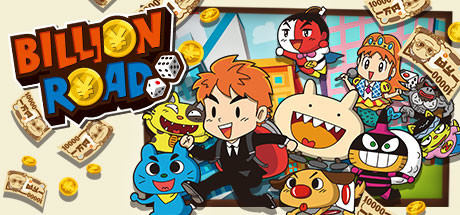
Billion Road, developed by BANDAI NAMCO Entertainment Inc. and published by Acttil, LLC., is a digital board game that mixes lighthearted strategy, quirky visuals, and a heavy dose of randomness to create an experience that feels part party game, part economic simulator. Set across a stylized map of Japan, the game tasks players with traveling the country, investing in properties, collecting strange and often helpful monsters, and competing to accumulate the most wealth by the end of the game. It’s an experience that plays best with others, whether locally or online, but also offers single-player modes for those who prefer a more relaxed competition against the AI.
The gameplay structure is straightforward on the surface—players take turns rolling dice to move around a sprawling board made up of real-life Japanese locations. Each stop on the map can lead to a variety of events, such as purchasing properties, picking up items, encountering helpful or harmful monsters, or simply progressing toward the next goal location. At set intervals, players earn profits from their owned properties, and the wealthiest player at the end of a designated number of in-game years is crowned the winner. This basic economic loop is simple enough to grasp quickly but is enriched by a wide variety of mechanics that add chaos and charm in equal measure.
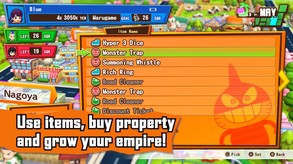
Where the game starts to stand out is in its variety of supplemental systems. Players don’t just accumulate properties and money—they also acquire monsters that act like companions, offering abilities that range from movement bonuses to blocking opponent attacks or generating income. Some monsters are passive helpers, while others introduce game-changing effects that can either help their owner or disrupt the flow of their opponents. In addition to monsters, players can collect and use items that allow for even more strategic choices—or sometimes, sheer havoc. The interplay of monsters, items, and event tiles makes every game feel unpredictable and helps keep the experience fresh, even after multiple sessions.
Visually, Billion Road opts for a cartoonish and colorful art style that suits its lighthearted tone. The characters are exaggerated and expressive, the monsters are often comically bizarre, and the board is peppered with bright, vibrant landmarks and seasonal shifts. The game attempts to represent Japan’s geography in a fun, stylized way, with different regions reflecting their real-world counterparts in a tongue-in-cheek fashion. The music and sound effects are upbeat and playful, reinforcing the party-game atmosphere. While the visuals may not be technically impressive, their charm lies in their personality and approachability, making the game suitable for players of all ages.
Despite its strengths, Billion Road is not without flaws. One of the more persistent criticisms is the length of a full game, especially in Tournament Mode, which can stretch on for many in-game years. Even with a group of engaged players, a single session can last several hours. When played solo, the pacing can feel even slower, with extended periods of inactivity or waiting for turns to cycle. Furthermore, the game’s reliance on randomness—dice rolls, card draws, random events—can occasionally make strategy feel secondary. While skilled players can improve their chances by managing investments wisely and using monsters effectively, a string of bad luck can undo even the most well-laid plans.
Another area where the game stumbles slightly is in its user interface and information clarity. For a game centered around property management and strategic movement, it can be difficult at times to get a clear sense of which player owns what, or which paths are optimal to reach a goal. Navigating the map can feel clunky, and the menus don’t always surface useful information in an intuitive way. These issues are more noticeable during longer sessions or when playing with less experienced players who may need to rely more heavily on visual feedback and cues.
That said, the game shines when played with friends. Whether you’re competing for the next big investment, racing to a new goal city, or sending mischievous monsters after your rivals, the game thrives on the social dynamics it creates. The moments of betrayal, unexpected windfalls, and dramatic comebacks make it feel similar to games like Monopoly or Fortune Street, where the fun often lies more in the interactions than in the mechanics themselves. The addition of online play helps extend the game’s lifespan, although the active player base is modest, making scheduled sessions with friends a more reliable option than matchmaking.
Ultimately, Billion Road is a game that knows exactly what it wants to be: a colorful, chaotic board game with enough structure to encourage light strategy, but enough randomness to keep things unpredictable and humorous. It’s not a game built for deep competitive play or intricate economic simulations, but rather one that thrives on creating memorable moments between players. For those who enjoy digital board games with a sense of humor and don’t mind a fair share of luck influencing the outcome, it’s a unique and worthwhile experience. For others who prefer more tightly controlled, skill-based strategy games, it may not hold the same appeal. Nevertheless, for the right audience, Billion Road delivers a fun, charming ride through a cartoon version of Japan’s economy, one roll of the dice at a time.
Rating: 7/10