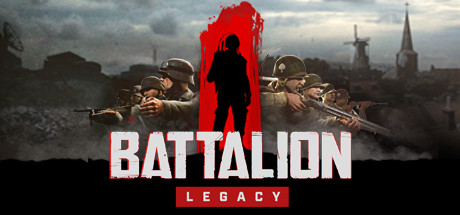
BATTALION: Legacy is a multiplayer first-person shooter developed and published by Bulkhead Interactive that focuses on fast-paced competitive combat inspired by classic military FPS games from the early online shooter era. Originally launched as BATTALION 1944 before later rebranding into its current form, the game was designed as a return to older-school multiplayer fundamentals where reflexes, map control, teamwork, and aiming skill mattered more than hero abilities or excessive progression systems. By combining World War II-inspired weaponry with modern competitive design principles, BATTALION: Legacy creates an experience that feels nostalgic while still maintaining the speed and responsiveness expected from contemporary shooters.
Unlike many modern FPS titles that emphasize cinematic storytelling and large-scale scripted warfare, BATTALION: Legacy keeps its focus almost entirely on competitive multiplayer gameplay. The game places players into tightly designed maps where tactical positioning, communication, and quick reactions determine victory. Every firefight feels dangerous because the time-to-kill is extremely fast, meaning a single mistake can instantly shift the outcome of a round. This design creates a constant sense of tension during matches, especially in objective-based modes where every elimination matters.
The gunplay is easily the strongest aspect of the entire experience. Weapons feel sharp, responsive, and deadly, with each firearm carrying its own recoil behavior, firing rhythm, and tactical purpose. Rifles reward precision aiming, submachine guns favor aggressive close-range movement, and sniper rifles demand accuracy and map awareness. The game avoids overly complicated weapon gimmicks and instead focuses on straightforward but highly satisfying shooting mechanics. Every successful shot feels impactful, and firefights are decided more by skill and positioning than by random chance or excessive equipment advantages.
Movement also plays an important role in shaping the gameplay flow. Characters move quickly across maps through sprinting, strafing, and rapid repositioning, allowing experienced players to outmaneuver opponents through timing and smart route selection. While the movement system remains grounded enough to preserve the military atmosphere, it still provides enough fluidity to keep matches energetic and competitive. Skilled players who understand map layouts can use movement aggressively to control sightlines, rotate between objectives, and surprise opponents before they have time to react.
The map design reflects the game’s strong emphasis on competitive balance. Arenas are compact, symmetrical in many cases, and carefully structured around tactical engagements rather than cinematic spectacle. Sightlines, chokepoints, and objective locations are positioned to encourage coordinated team play and strategic movement. Instead of overwhelming players with massive environments, the game prioritizes focused combat zones where map knowledge becomes essential for success. Learning routes, flanking opportunities, and defensive positions gives players a major advantage during higher-level matches.
Competitive multiplayer clearly serves as the heart of the experience. Ranked matchmaking, objective-focused modes, and tactical round-based gameplay all reinforce the game’s esports-inspired direction. Team communication becomes increasingly important during competitive play because coordinated pushes and defensive positioning often determine victory more than individual kill counts alone. This emphasis on teamwork helps create matches that feel tense and rewarding, particularly when both teams are evenly matched.
Visually, BATTALION: Legacy adopts a realistic military aesthetic without sacrificing gameplay clarity. Environments are detailed enough to feel immersive while still remaining readable during intense firefights. Weapon models, reload animations, and combat effects are polished and satisfying, helping the game maintain a professional presentation despite operating on a smaller budget than major AAA shooters. The World War II-inspired setting also gives the game a familiar but effective visual identity.
The sound design strengthens the combat considerably. Gunfire sounds loud and impactful, footsteps provide valuable tactical information, and environmental audio helps reinforce the tension during close competitive matches. The audio prioritizes gameplay awareness rather than cinematic spectacle, which fits the game’s competitive focus extremely well.
However, BATTALION: Legacy faced several major problems that prevented it from reaching a larger audience. One of the biggest issues was its inconsistent player population. Multiplayer shooters rely heavily on maintaining active communities, and declining player numbers eventually made matchmaking slower and less balanced. New players often struggled to find fair matches, especially when paired against experienced veterans already familiar with the game’s mechanics and map layouts.
The game’s launch period also suffered from technical problems and missing features that negatively affected first impressions. Server instability, optimization concerns, and various balancing issues caused frustration among early adopters, and although improvements were introduced over time, the initial damage to player retention proved difficult to reverse. Certain weapons and strategies also occasionally dominated competitive play, creating balance concerns during specific periods of the game’s lifecycle.
The steep learning curve may also discourage casual players. Since the game places so much emphasis on raw mechanical skill, tactical awareness, and reaction speed, newcomers can easily feel overwhelmed by experienced players who understand the maps and gunplay systems more thoroughly. Players looking for relaxed progression systems or forgiving matchmaking may therefore find the experience frustrating during the early hours.
Despite these shortcomings, BATTALION: Legacy remains a strong example of old-school competitive FPS design. The game successfully captures the feeling of classic multiplayer shooters where precision aiming, teamwork, and tactical movement were the primary focus instead of excessive customization or hero-based abilities. Its combat system remains satisfying because victories feel genuinely earned through player skill and coordination.
For fans of classic arena shooters and competitive military FPS games, BATTALION: Legacy offers an intense and rewarding multiplayer experience filled with fast firefights, tactical depth, and strong mechanical gameplay. While technical issues and declining player numbers ultimately limited its long-term success, the excellent gunplay and competitive structure still make it an enjoyable title for players who appreciate skill-focused online shooters.
Rating: 6/10