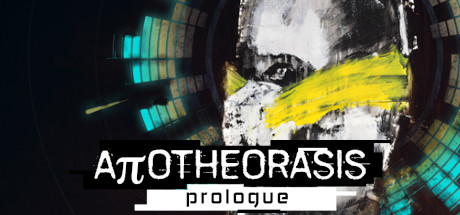
An FPS with ZERO graphics!? Yes, you heard right ! Run • Blast • Escape • Survive, through sound alone, as you challenge your makers and unravel the mysteries of your existence. You may be blind, but you're far from helpless !
Revenue comes from in-game items and microtransactions, which our price-based model doesn't estimate. The player count below is how many people own it, not what they spent.
About
Genres
Stats
Languages: English**languages with full audio support
Engagement
Reviews
Themes across 42 recent reviews and how positive each mention is. A keyword signal, not full sentiment analysis.
Reviews
interesting and refreshing idea :)
That was quite the experience. I love the mad scientist so much :D but i still had some issues with really aiming, because it sometimes wasn't really clear if the mark was before or behind me, otherwise, that was really really great. The voice acting is on point.
[h1]Before I played Apotheorasis Prologue, I had a small pp, no friends, no gf, depression, and no life. These things havent changed, but the game is pretty good[/h1]
Media

Related
Related
Price dynamics, follower growth, revenue and sales trajectories with interactive tooltips
This and every other Pro feature is free until October 20, 2026. A free account is all it takes.
Hours played at review time, across 42 reviews with recorded playtime.
positive critical· bar length = how often the theme comes up
Apotheorasis • Lab of the Blind Gods | Prologue is one of those experimental games that takes a familiar genre and changes the way players interact with it at a fundamental level. Rather than presenting a traditional first-person shooter filled with detailed environments, weapon models, interfaces, and visual effects, it builds its experience almost entirely around three-dimensional sound. Developed and published by Tall Guy Productions, the game places the player in the role of someone who cannot see, turning careful listening into the primary method of navigating, fighting, surviving, and understanding the strange situation unfolding around them. The story gives this unusual design a meaningful foundation. The protagonist awakens after a devastating incident with blindness, an inability to speak, and no clear memory of who they once were. From there, the player is drawn into a mysterious sequence of events involving an unfamiliar laboratory, questionable experiments, unusual beings, and characters whose intentions are not immediately trustworthy. A voice offers guidance, but the uncertainty surrounding the protagonist's circumstances means that even apparently helpful information can feel suspicious. The prologue mixes science fiction and thriller elements with occasional humor, creating a tone that can move between unsettling and deliberately strange without abandoning the central mystery. The most distinctive feature is the complete dependence on binaural 3D audio. Headphones are effectively the player's window into the world. Footsteps, voices, machinery, gunfire, movement, environmental noises, and other directional sounds communicate information that would normally be provided through graphics. Players must listen carefully to determine where something is located and how they should respond. The concept initially feels disorienting because years of gaming habits encourage players to look for doors, enemies, pathways, objects, and hazards. Here, those instincts have to be replaced by active listening and spatial interpretation. Combat benefits greatly from this approach. Instead of simply spotting an enemy and moving a crosshair toward the target, the player has to determine an opponent's position through sound. Directional audio becomes crucial during firefights because attacks and enemy movements provide information about surrounding threats. Even relatively straightforward encounters can become tense when the player cannot immediately confirm how many dangers occupy an area or precisely where they are standing. It creates a different kind of FPS challenge, one based less on visual reflexes and more on concentration, recognition, and spatial awareness. Navigation and stealth are equally transformed. Walking through an environment without a visible map or conventional landmarks can make relatively simple spaces feel mysterious. Environmental sounds serve as reference points, while dialogue and other cues help establish direction and context. Stealth situations become especially suspenseful because the player cannot simply watch patrol patterns from behind cover. Listening becomes both an offensive and defensive tool, and uncertainty plays an important role in maintaining tension. There can be moments when orientation becomes confusing, but that difficulty is closely connected to the experience the game is intentionally trying to create. Another interesting consequence of the audio-only presentation is how strongly it encourages imagination. The player hears descriptions, characters, threats, machinery, and events without being given a definitive visual representation of everything involved. As a result, the mind effectively constructs its own version of the laboratory and its inhabitants. This can make certain scenes surprisingly atmospheric because the unknown is allowed to remain unknown. It also demonstrates how sound can carry narrative and environmental information without relying on elaborate graphics. The checkpoint system helps prevent the unusual mechanics from becoming excessively frustrating. Mistakes are inevitable while learning how to understand spaces and threats through audio, so generous checkpoints make experimentation much easier to tolerate. Failure generally becomes an opportunity to reinterpret the sounds of an encounter rather than a reason to repeat a large amount of content. The inclusion of choices also adds some agency to the narrative, while progress and achievements from the prologue can carry into the complete game. Its prologue status naturally creates limitations. This is an introduction rather than a full campaign, representing only an early portion of the broader story. Some mechanics therefore receive limited development, while major narrative questions are intentionally left unresolved. Players who become invested in the mystery should expect the conclusion to function more as a transition toward the complete experience than as a fully independent ending. The unusual presentation may also be demanding during longer sessions, especially for players who find audio-based spatial navigation difficult. Steam Deck compatibility is less straightforward than with a conventional game. There is no need for demanding graphical performance, but the experience depends heavily on accurate stereo and positional audio. The game does not have an official Steam Deck Verified designation, so it should not be treated as formally verified for Valve's handheld. It may be possible to run it through Steam Deck's compatibility environment, but individual results can vary. Anyone attempting to play it on the Deck should use good stereo headphones rather than relying exclusively on the handheld speakers, since directional audio is central to both navigation and combat. What ultimately makes the prologue worthwhile is its commitment to its concept. The absence of visuals is not simply an unusual presentation choice placed on top of ordinary mechanics. Storytelling, combat, exploration, navigation, stealth, and atmosphere are all constructed around hearing. That consistency gives the game a distinct identity and turns actions that would normally be effortless in an FPS into surprisingly thoughtful challenges. Apotheorasis • Lab of the Blind Gods | Prologue is therefore best approached as an audio-driven experiment rather than a conventional shooter. Its short length and intentionally disorienting mechanics will not suit everyone, but players interested in unusual interactive experiences should find plenty to appreciate. It demonstrates how effectively sound alone can establish space, danger, personality, and atmosphere while offering a memorable introduction to a much larger mystery. Rating: 8/10
☀️
Jogo doideira!
ears
Я поважаю намагання автора винайти щось нове у принципі, хоча і сумніваюся що повністю відсутній візуальний фідбек це майбутнє. Я запам'ятав це демо, і це головне. Рекомендую заради унікального досвіду.
イヤホンが必須。音声しか聞こえない状態で左右から聞こえる音だけを頼りにブラスターを撃ったりする。 英語だけど、こちらが操作しないと何度も繰り返してくれるのでどうにかなるような。 操作は、上キーでyes、下キーでno。射撃はスペースとマウス左クリック。マウス右長押し(?)でシールド。wasdで移動みたいだけど、左右キーとマウス移動の区別は良くわからない。 面白いアイディアなので、おすすめにしたけど、私はチュートリアルの模擬戦闘で挫折した。
it's a nice exercise
Selling now
See how fast this game is selling right now — estimated copies and revenue per day from recent review growth.
Players by region
Where this game's players are, estimated from review languages.
Related
| Game | Estimated lifetime revenue | Reviews | Review score | Price |
|---|---|---|---|---|
| $10.4K | 55 | 84% | $9.99 | |
| $69K | 109 | 76% | $19.99 | |
| $16.2K | 70 | 91% | $5.99 | |
| $1.5K | 9 | 56% | $8.99 | |
| $1.3K | 13 | 77% | $4.99 | |
| $1K | 15 | 87% | $3.99 |